Results for Rama Katha Rasa Vahini

Rama Katha Rasa Vahini - Post 33

September 14, 2018
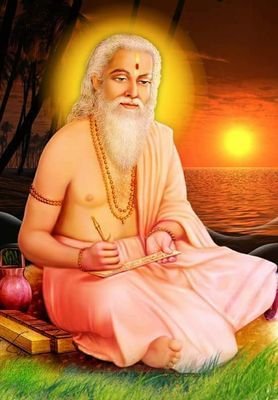
VALMIKI HAILS  SRI RAMA

Dear All,

Rama along with Lakshmana and Sita, take leave of Guha and then proceed to the forest.

They first meet Sage Bharadwaja and then they visit Sage Valmiki.

On being asked by Sage Valmiki on the purpose of their visit to forest, Rama  describes about the 2 boons asked by Kaikeyi, to send Rama in exile for 14 years and to crown Bharatha as ruler of Ayodhya.

Swami writes 

"The sage listened to the story, and communicated his joy with a face lit with smiles. He said. "Rama! As you fulfilled their desires then, you have satisfied my desire now. My austerities, vows and yearning have at last yielded fruit today. I must confer on Kaikeyi my heartfelt gratitude and a share of the bliss I am now enjoying."

Valmiki sat long in silence, with his eyes closed, while trying to keep within control the emotions of gratitude and joy surging inside him. Tears gathered in his eyes, tears of Ananda, and they rolled down his cheeks in big drops that chased each other.

Rama broke the silence and said, "We shall reside at the place where you direct us to live. Indicate to us a place where we shall not cause any trouble to any one and where we shall not come in the way of hermits and hermitages; give us proper advice. We shall put up a 'thatch' of leaves at that place and spend some time therein."

These words from a pure sincere heart moved the sage; he said, in reply, "0 Rama! I am indeed blessed. 

  • You are as the Flag that proclaims the glory of the Raghu dynasty. For what reason are you voicing thus? 
  • You are the force that fosters the path laid down in the Vedas; you are the power that safeguards it from harm. Sita is 'the deluding half of your personality, your Maya. She creates, maintains and destroys (as you 'will') worlds beyond worlds. And, Lakshmana is the very basis of the movable and the immovable, the 'thousand-hooded serpent', the Primal Sesha-Nag, which upholds the Universe. 
  • You have assumed forms, in order to carry out the wishes of the Gods, that you re-establish righteousness in the world. 
  • You will, I am sure, destroy all demonic hearts, pretty soon. 
  • You will protect the good and the compassionate. Rama! You are the eternal Witness of the play named 'The World'. The Universe is the 'seen'; you are the Witness. Even the gods fail to gauge your Reality and your Glory. How then can ordinary mortals understand your Mystery? Only those who have received your Grace, namely, Wisdom, can claim to have known something of your Truth and your Majesty. 
  • You have taken this human form in order to promote the peace and security of good men and the gods; as a consequence, you are conversing and behaving like one of us. 
  • Only fools are misled into behaving that you are a man among men! We are all puppets who play about as you direct, as you pull the strings. 
  • Who are we to direct you to act thus wise or to stay at a certain place? Rama! Are you planning to delude us, ascetics, by your words? 0, how wonderful is your play! How realistic is your acting! Don't I know that you are the Director of this cosmic drama? I cannot understand why you are asking me to select a spot where you can stay for some time in this forest. Which spot can I choose and recommend? 
  • For, is there any spot in the whole Universe where you are not, already? Answer me this question, and thereafter, I shall point out the place to which you can go and where you can stay" Valmiki said, looking at the charming face of Rama; in the extremity of his delight, words melted away on his tongue.
  • .........."Rama! If you wish that I elaborate further, listen: Stay in the heart of the person who discards the evil in others and loves them for the good they have, who trudges along the journey of life in the path of morality and integrity, who observes approved limits of conduct and behavior, and who has the faith in thought, word and deed, that the Universe is your creation and that the entire objective world is your body.
  • "Nevertheless, since you have assumed now this human body and come here in order to carry out the commands of your mother and father, and questioned me in that role, I am venturing to answer, as if that role is real. You can reside on the Chitrakuta Hill. It has all facilities for comfortable stay. It is a holy place, and a charming beauty spot. The atmosphere is saturated with love and peace. Lions and elephants roam together there, with no trace of rivalry. The river Mandakini, extolled in the Vedas, flows round the hill. Sages like Athri live there in hermitages, which you can visit and render more sacred. Confer your blessing on that sublime spot and on that dear divine river."

----------

Dear All,

Author, even while reproducing the  above relevant portion from Swami's writings, is awestruck and wonders, whether Swami is writing about Rama or about His own incarnation?

In order that you may appreciate why author is awestruck, he has simply highlighted few lines in today's post with bold letters.

As a Sai devotee, you may please relate those highlighted lines with your awareness about the Sai Avatar!!!

Love.


Rama Katha Rasa Vahini - Post 33 Rama Katha Rasa Vahini - Post 33 Reviewed by Bhakti Mantra on September 14, 2018 Rating: 5

Rama Katha Rasa Vahini - Post 32

September 13, 2018

Rama meets Guha 

We all know how Rama meets Guha and how Guha is moved by the plight of Rama, Sita and Lakshmana.


Swami writes,

"Sita slept on the soft bed of grass. Lakshmana sat at the Feet of Rama, in order to massage them tenderly, to relieve the tension of exertion. Rama realized that Lakshmana would continue the service, so long as he appeared to be awake; he desired to induce him to take rest; so, he pretended as if he had gone into deep sleep. At this Lakshmana feared that any further pressing of the feet might disturb the sleep, and he quietly slipped into the distance. 

There, he sat in the 'hero' posture, so that he could gaze intently at the four directions, and recognize at once any wild animal approaching the spot, or any demon or demonic person bent upon disturbing the sleep of Rama; he was all attention and vigilance.

Seeing this, Guha too instructed his faithful lieutenants to guard the area and ensure that nothing happened to disturb the sleep of Rama. He put on his shoulder the pouch of arrows, and holding the bow in readiness, sat near Lakshmana, eager to share his vigil.

Guha, his eyes filled with tears, held his palms folded before him, and asked him, "Lakshmana! The Palace of Emperor Dasaratha is, I guess, grander and more magnificent than the Divine Mansion of the Ruler of the Gods, Indra. In that Palace, everything is charming and beautiful; everywhere there is fragrance and sweetness; soft feather-beds and lamps embossed with precious gems, add to the grandeur and comfort of the palace. There, the beds have sheets light and white like froth on fresh milk, and pillows to match. Sita and Rama who used to sleep on such luxurious beds are now lying
on a grassy heap, with no coverlet or pillow, sleeping through sheer physical exertion! It is insufferable agony for me to contemplate this scene. There his father and mother, his aids and maids were looking after his needs and comforts in various ways. Sita and Rama who lived royally until yesterday are now lying on the ground! Alas, my heart is torn to pieces by grief.

"Sita is the beloved daughter of the world-renowned Emperor Janaka; yet, now, she is lying on a spread of dry grass. What a strange turn of fate is this! Are Sita and Rama fit for life in the forest? O, it is now being proven true that the consequences of one's acts are binding, in spite of everything else.

"Kaikeyi is the daughter of the King of Kekaya State. No one can believe that she is capable of this atrociously sinful act. These two are at a period of their lives when they have to be happy together. What a reprehensible act is it to inflict on them this hard sentence! Such a fate should not overtake even one's worst enemy.

"The Kekaya Princess has proved herself to be the axe that would cut asunder the very roots of the Tree of the Solar Dynasty. Her selfish greed has sunk the world in sorrow. Ah! My horrid eyes are destined to look on this pathetic sight! What despicable sin did I indulge in to deserve this punishment? Whose happy life caused my eyes in the past to become red with envy, that I had to see my beloved Rama in this plight?"

Guha wailed thus; unable to stop the onrush of the surging waves of grief, he kept his mouth shut, and sat with head bowed in irrepressible agony. At this, Lakshmana too was plunged in gloom. 

Lakshmana gathered some courage and said, "O! Chieftain of the Nishadas! One does not get happiness through another, nor does he become miserable through another. He cannot get good fortune or bad fortune through another. There is no possibility for such indirect means to succeed. Nor can one really be either happy or miserable. 

Each one comes for some purpose, urged by the potentiality of his acts in the previous birth or by some Sovereign Will and Resolution. And, in the course of fulfilling that purpose, they appear to be happy or miserable, that is all. A beggar dreams that he is a king; a king dreams that he is a beggar. When they awake, they find that the happiness and the misery were unreal and short-lived. So too, the world is a dream, unreal, illusory. It is Mithya

You feel sorrow because Rama is in this plight, but Rama is above and beyond grief and joy. For those who watch him, according to the good fortune or misfortune as decided by the merit or demerit acquired and accumulated, he may appear to be happy or miserable; what you see asjoy or grief in Rama is only the reflection of your own mental state." At this, Guha calmed himself, and gave up the rage he had directed against Kaikeyi, a little while ago. He understood that it was not proper to find fault with another and assign blame.

"People are all laid up in the sleep of delusion. And, they are engaged in witnessing a variety of dreams. This is the way men spend the night called 'life'; the Yogis, self-mastered people, they alone keep awake in the night, without being caught up in or enchanted by dreams. They have no use for the world and its contents. 

They have turned away from all sensual pleasures and entanglements. Until this stage is reached, people cannot refer to themselves as  'awake'. When Jnana is attained and the Reality is realized, then the bonds of delusion fall off, and Love is fixed on the Lotus Feet of Sri Rama". 

Guha's thoughts ran on in this strain. He was comforted and strengthened by them. The rest of the night was spent by Guha and Lakshmana, narrating to each other the super-human attributes of Rama and the fullness of the Glory that was latent in him.

------

Dear All,

We have to observe, read and absorb such profound truth/ such profound teachings given by Sai, even while writing on the story of Rama.

A devotee residing in Puttaparthi asked author during his parthi trip last month, "What will you write on this vahini, it is a simple story of Rama".

Author replied, "Even in such simple Rama story, Swami, as an avatar, has given very profound lessons in many places. One must have the eye to catch such lessons and absorb them."

The highlighted para, where Sai gives us such profound truth of life through Lakshmana's conversation with Guha, is worth reading several times and to absorb the same.

Love.


Rama Katha Rasa Vahini - Post 32 Rama Katha Rasa Vahini - Post 32 Reviewed by Bhakti Mantra on September 13, 2018 Rating: 5

Rama Katha Rasa Vahini - Post 31

September 12, 2018
SITA CONVINCES ON HER JOINING RAMA IN EXILE

Dear All,

While Rama shares with Sita about the 2 boons of Kaikeyi, about the need for Rama to fulfill father's command and move to forest for 14 years and also, while Rama is explaining to Sita as to how she has to take care of  his mother, father, brothers etc in his absence, Sita smiles and addresses Rama thus:-

"Rama! you are the son of Dasaratha. I have not heard at any time words unworthy of that lineage fall from your lips. Mother, father, brother, sister, son, daughter-in-law everyone has to experience a quantum of happiness and misery; in proportion to the good and bad done by each. But, the wife has a special source of fortune, good or bad. That is to say, she has a share in the good and bad for which her husband is responsible. She is endowed with a part of his joy or grief. 

So, if the Emperor Dasaratha has ordered you to go into the forest, he has given me too the order to go. A woman may be fed and fostered by her mother and father; she may be revered by her son; she may be served by her maids. But, they can never be her shield and support. The trinkets and toys with which you try to convince me serve only to arouse amusement in me. 

During the years preceding my wedding, father taught me all the duties that shall guide and bind me. I am neither an ignoramus nor a seeker of power. And, more than these, let me tell you, I do not cling fanatically to any opinion because it is mine. There is no need for you to point out my special duty to me, for, I know them all. It is only when I decide to remain here, isn't it, that you have to tell me how and in what ways I have to serve the parents-in-law, the sisters-in-law, and the ruler of the land? But, when I am with you, what chance is there, what need is there, for me to take on the service of others. I am coming with you in full joy! Since a long time, I have had an unfulfilled desire to spend some years in forests. It is my good fortune that I have now the chance to satisfy that desire, in the company of my Lord! I will not give ear, if you insist that I should not express my point of view in this great matter. Donít be angry with me that I disobey you. It is not just and proper for you to throw me aside here, as one throws out water from the cup after quaffing a mouthful. Believe my word! I shall not continue in Ayodhya even for a moment; take me with you".

With these words, Sita fell at Rama's feet and held them tight. "I have not the slightest sorrow that you were not crowned. I hold you dear, crowned or uncrowned. Wherever you are, that is the Empire for me. There is my Treasure. That is my Glory," she pleaded and prayed. Rama told her that forest life was fraught with fears and dangers. The forest was infested with wild animals and wilder men, demonic depredators and dacoits. One has to encounter floods in rivers, wade through thick thorny undergrowth. He said that she was not used to traverse places on foot and therefore, she will have to undergo great exhaustion. He described various other forms of fear and anxiety that will confront her. But, Sita was unmoved. She replied. "Lord! However wild the animals may be, however thick and terror-striking the forest may be, what harm can they cause, what injury can they inflict on me, when you are by my side? I can walk through forest tracks; it will be no trouble for me. I will be happier if you ask me to walk first, preparing the path smooth for you to tread. I shall pick and cast away stones, pebbles and thorns to lessen pain, making your journey easy. 

Allow me to be with you, so that I may render this service and be happy. Here, in the palace of Ayodhya, and in the zenana, I could not get the chance to serve you. I felt worried and miserable that all services for you were undertaken by attendants and aides. There will be no attendant, no aide in the forest! So, I can be happy, doing all the services myself. That is my great good fortune! Make my life worth while, Lord. Give me that glorious chance!" Sita prayed in a variety of ways, pleading for mercy and justice. Rama was moved to compassion, He said, "Sita! Living in the forest, you cannot be happy, you have to suffer greatly in the coming days". 

Rama expatiated on the horrors of jungles and the sufferings that one has inevitably to meet there.  She replied, "Rama,  You are a scion of the lkshvaku line, which has saved millions from danger and disaster! Can you not guard me against them? Are you so weak of hand? I wonít give you trouble; through me, you will not have the slightest worry. Lord! I cannot but follow you. I will lay myself down and sleep at your feet; that will give me the fullest bliss. Rama! I know and recognize none except you. I cannot exist alive for a moment apart from you. Well. If you hold fast to your resolution and proceed, leaving me in Ayodhya, Sita would have drawn her last breath before you reach the forest. Take this as Truth".

Sita's eyes shed streams of tears as she spoke these words.
Rama tried to pacify her. He said, "0 "Sita, you are a very staunch adherent of Dharma. It is best for you to stick to your righteous qualities maintaining them at this place. You cannot act as your will dictates; you have no freedom to behave as you desire. Your Dharma is to act in accordance with my words. Therefore, give up this idea of yours. I am saying this for your own good. Guarding you will be a burden for me certainly. Streams rolling down from mountain peaks, wild beasts that dwell in the caves, lions and tigers roaming without let or hindrance amidst the hills and valleys - these have to be overcome. Rivers in spate will have to be forded. 

We may have to leap down from huge boulders and rocks. Considering these difficulties I have to tell you in such emphatic terms to stay. You have to wear matted hair and clothes of the bark of trees. We men have to go to some river or lake for the evening rites of worship; at that time, who will watch over you against any calamity that might happen? Whatever may be the crisis, we cannot give up those rites. You know how strict that rule is; so, you may have to be alone for some time daily. We cannot say what will happen when".

Rama tried to picture before Sita fearful scenes of forest life, but Sita was not affected in the least. 

.......Listening to Sita revealing her hard determination, Rama continued. "Sita! You are entangling yourself in the complexities of rights and claims! When I proceed to the forest, the aged parents will be wailing and weeping for me. At that time, you can console and comfort them, with gentle assurances. That is your duty. You must conduct yourself according to the needs of each occasion. Be with them; serve them; that is the way to please me, and give me Ananda". 

"However long you argue, whatever you may assert, I shall not leave off treading along the prints your feet make. You may kill me for transgressing your order, but I assert I can never be without you. Ramachandra! No sooner did you speak of the exile in the forest you are entering upon than I had such an upsurge of joy, remembering an incident that took place in my childhood! You cannot understand the extent of that joy! 

...........Sita bowed low, and fell at Rama's feet with these words. Rama felt that it would be improper to continue resisting her wishes. He resolved to yield. "Sita!" he said, "Give up your grief. Do not give way to sadness. As you desire, I shall take you with me. Engage yourselves quickly in preparing for the journey to the forest!" Hearing the sweet words with which Ramachandra spoke, Sita was elated; she was filled with boundless joy. She said, "Preparation? What has one to prepare, to live in the forest? I am always ready, with whatever I need, for I need only you; I have no other want. I am following you, this moment. In you I have all I need. You know I have no desire for anything other than you". With these words, she held Ramaís hand in hers and stepped forward. 

Rama said, "Sita! Consider this: You will not be in Ayodhya for fourteen years. Therefore, go and release the parrots and birds you have reared as pets with love and care. And the cows you fostered with affection! Give them away to Brahmins, so that they might be treated lovingly. Distribute the various articles of dress, the vehicles, and other articles used by you, to the people, or else, they will be ruined by time. It is far better that they be used rather than get disintegrated". When this suggestion was made, Sita immediately ran towards the cages, and addressing each pet bird in loving accents, told them; "Go! Like us, roam freely in the beautiful forest." With her own hands, she opened the cages and set them free! Then she went to the cow-shed. She fed the cows with various tasty foods and talked to the Brahmins who were to receive them as gifts. Her charming face beamed with joy. Spectators who watched her giving the things away felt their hearts melt with sorrow at her impending departure. They shed tears in streams for they were moved by the large-hearted generosity, and more than all, by her exultation at the prospect of accompanying her husband into exile in the forest. Her ecstasy was beyond the pen of any poet.

Love

Dear All,

Sita, with her perseverance, wins Rama's heart and convinces Rama to take her along with Him for exile.

In the process, she teaches to the humanity for centuries to come on duties of a wife!

Love.


Rama Katha Rasa Vahini - Post 31 Rama Katha Rasa Vahini - Post 31 Reviewed by Bhakti Mantra on September 12, 2018 Rating: 5

Rama Katha Rasa Vahini - Post 30

September 11, 2018
LAKSHMANA'S FURY AND RAMA'S TEACHING


Dear All,


When Rama communicates the news about Kaikeyi's boons and demand for Rama to be away in exile, Lakshmana, who is listening to the same, is furious and interrupts thus.


Swami writes, 


"Lakshmana was watching the anguish of Kausalya and listening to her words. He could not control his emotions. He was bursting with anger. He held his hands tight over his chest, and said, "O! Revered Mother! I shall never accept this. Is Rama to leave the kingdom and betake himself to the forest, yielding to the prattle of a woman?

I cannot tolerate it. Father has become too old; his mind is very unsteady as a result. And, he is entangled in sensual pursuits, and he has become a slave to the enticements of Kaikeyi; he is pitiably uxorious; he has no sense of discrimination about the consequences of his actions. He is liable to issue any kind of order in his infatuation. Orders of such type should not be obeyed. The king is in a state of feeble-mindedness, unable to distinguish the real from the unreal, the momentary from the momentous. When such rulers give orders out of infatuation they can well be disobeyed. What crime did Rama commit that he should be sent into the forest? Even the cruelest enemy of Rama (if he has any), or even the most hard-hearted barbarian suffering punishment for his crimes, cannot point his finger at the slightest slur on his behaviour or action. 

No king on earth has the authority to drive into the forest as an exile a person of such unquestioned innocence, purity of intentions and holy sanctity. Rama is steady in his straightforward path; he is the master of his senses; he honors and treats with respect enemies of every type. Will any father drive such a son into the jungle? Moreover, the king is most attached to Dharma; he is a hero full of sacred ideals; he is an adherent of the best in all faiths. Can such a king issue this command? Judging from this, it is certain that
Dasaratha is either insane or enslaved by passion. Any command from a person who is either of these, is unworthy of consideration. The words of a king who behaves like a lunatic or an infant need not be honoured at all. Forgetting the dictates of political morality, giving up the path of worldly wisdom, throwing to the winds the demands of paternal affection, he has become mad, giving free vent to his whims and fancies. Need his command be treated as valid? I wonít agree that it should be respectedî. 

Lakshmana turned towards Rama, and clasping his hands in reverence, he said, "Rama! Pardon me! Assume the rulership of the realm before news of this spreads and becomes known to all. I shall be by your side, with my bow. Whoever in Ayodhya stands up against you will have to meet the arrows from this bow. Of course, there is no such, either in Ayodhya or any other place. But, if any opposition develops, this great City will become a desert, with no human inhabitant. My sharp arrows will see to that. Why repeat a thousand things? If Bharatha opposes, or any one on his behalf, I shall destroy him, root and branch. I will not care. Even Dasaratha, if he stands forth as a supporter of Kaikeyi in this struggle, I shall capture him and shut him up in prisonî. 

While Lakshmana was holding forth in this strain, Rama looked at him sternly, intercepting the flow of his feelings and admonished him thus: 

"Lakshmana! Your words are crossing the bounds. No one can deny me what I wish for. None can change the march of my will. My exile in the forest cannot be avoided. You are talking prompted by your love towards me and the desire to prevent your separation from me. Forbear! Forbearance will save you against all anxiety and fear. Be patient. Donít get agitated. Do not entertain ideas of hatred against either father or brother Bharatha. They are pure, holy persons. Kaikeyi too is highly venerable. She is to be honoured and worshipped. The boons she asked are also blameless. She loved me, caressed me, fondled me, nursed me, played with me, derived joy from me, more than her own son, Bharatha. When the Mother prays today for such boons from father, boons quite contrary to the ways of the world, surely there must be some hidden significance in the affair. This must be the Divine Plan, not mere human tactics. Be quiet, give up your fears and hatreds, We shall await what happens next", Rama advised him. 

At this, Lakshmana fell at the feet of Rama and said. "Rama! On what basis, under what authority is Bharatha to be given the Crown that ought to be yours? Which other son has the right which the eldest has not? You are obeying this absurd, unjust order because of father; but I will not approve of it, whatever you may say in justificationî. Turning to Kausalya, Lakshmana continued: ìRevered Mother! To tell you the truth, I am devoted to Rama. I speak this on oath: I cannot exist even a single moment apart from Rama. If Rama has no desire for the Kingdom and if he moves into the forest, I will follow him. I will walk in his footsteps, I will be the shadow for him. If he but orders so, I shall jump most joyously into the blazing fire. I shall heed only his orders, not of any one else. Mother! I cannot bear the sight of your sorrow. He is your son; he is my Ramachandra. How can any one be away from his own life-breath?" Listening to Lakshmana, Kausalya was a little comforted. She stroked the head of Lakshmana saying, ìYour love gives me much consolation. Your words give me great strength. Brothers of your kind are rare indeed! The world considers the mother who has borne such children as venerable and holy; but, we are afflicted now with the feeling that we are great sinners. Rama will not desist from his resolve. Exile is inevitable for him. I want only this now: Take me also with youî, she wailed. 

Rama looked at Lakshmana and said, "Brother! I know the extent of the love you bear towards me. I am not unaware of your heroism, your ability and glory. Mother is suffering great grief, since she is unable to understand the true facts and the value of self-control. Besides, since I am the child born of her loins, grief is natural. But consider: for all values of life, righteous conduct, Dharma, is the very root. And, Dharma is secure only on the foundation of Truth. 

"Sathya and Dharma are interchangeable. One cannot exist without the other. Truth is Goodness; Goodness is Truth. I am now achieving both Sathya and Dharma, while acting in accordance with the command of Father. No one dedicated to the good life shall break the word plighted to the mother, the father or the esteemed Preceptor. Therefore, I shall not overstep the orders of Father. That is certain. 

............Give up violence and cruelty and adopt my stand. I Rama stroked the beck of Lakshmana, who was weighed down by anger and sorrow and spoke soft loving words to assuage his grief."

-----


Dear All,

Through the above content, Swami teaches us on how to uphold both Sathya and Dharma together at times when there is an apparent contradiction/conflict between the two.

Imagine, in place of Rama, a person with ego and selfishness may give an interpretation to Dharma as " taking charge as prince and protection of people of his kingdom'

Here, Rama shows to the world that foremost Dharma is to obey parent's command and also along with that, Sathya or truthfulness is to take up father's command with full  reverence and truthful heart!

Love.


Rama Katha Rasa Vahini - Post 30 Rama Katha Rasa Vahini - Post 30 Reviewed by Bhakti Mantra on September 11, 2018 Rating: 5

Rama Katha Rasa Vahini - Post 29

September 10, 2018
Dear All,

We move on to the stage where Kaikeyi asks for boon from Dasaratha that Rama should be in exile for 14 years and that her son Bharatha should be crowned as prince.

Sumantara informs Rama that Dasaratha and Kaikeyi have asked him to meet them.

Dasaratha is unable to share about the boon that Kaikeyi has asked him.

Kaikayi informs Rama about the same.

Let us read what our beloved lord Sai writes about the response of Rama, who was to be crowned as Prince on the next day.

"Rama was not affected in the least, while listening to these words uttered with such deliberate hard-heartedness. With a smile playing on his lips, he replied, "For this reason, it is not proper that father should lament". He nodded his head as if to signify his approval of the proposals made by Kaikeyi. But, when this conversation fell on his ears, Dasaratha felt as if his heart was being sawn within. He rolled and groaned in extreme agony. 

Rama turned towards Kaikeyi and said, "Mother! It will happen as you have contemplated! I am reverentially placing on my head the promise made by my father. It is enough if father draws me near him as he so lovingly used to do until now and speaks to me affectionately, and blesses me. Well, if I am at least told that I don't deserve these, that I have not earned that merit, I will accept it without demur and with equal joy and satisfaction. For, father always wishes the best for me. He blesses me always and desires that I progress ever.
He is a great seer; he is for me not only the father, but the preceptor who teaches the highest path. What responsibility and duty have I than conferring joy on him, who is both father and teacher? This is my dearest duty, my Dharma. I will derive immense Ananda in the forest for fourteen years. Not merely fourteen, if fatherís wish is such. I am prepared to live all my life in the forest itself! But, why is it that father is hesitating to tell me about these two boons? This is what pains me. Will I ever say no to what he says? Rama is the servant and support of the parental word, not its opponent. Is there any act of gratitude nobler than dedicating this body, which was received from the father, to his service alone? I shall offer it with Ananda; I am not one who waits to be told to do so.

"Mother why did you not mention to me that Bharatha is the person to be crowned? I and my brother - there is no difference between us; why then did you entertain any difference between us? We know no distinction among ourselves. Also, why is it that you say, this is your father's command? Do I ever disobey your commands? No I never do so. Whether you say it or my father says it I unhesitatingly carry it out. I am leaving Ayodhya this very day, and proceeding to the forest. Mother! Send proper messengers charged with the task of bringing Bharatha from the grandfather's place. 

It is best to get him quickly. If my moving into the forest and the coronation of Bharatha happen at the same time, father will be saved from physical strain, mental anxiety and the sense of void. And you too can be fully content! Who can say how events will shape themselves?"

When Kaikeyi heard these words from Rama, she was filled with Ananda and apprehension. She feared what might happen if Bharatha arrived while Rama was still present in the city; she concluded that it was best to insist on Rama leaving for the forest that very day itself. 

She replied, "Rama! It is possible to make arrangements to get Bharatha from where he is to Ayodhya; but, there is no need why you should continue here until he reaches this City. Since you have decided to start the hermit life, why should you delay your departure? For, the longer the start is delayed, the day of your return too will be advanced! It is advisable that you get ready to leave even now. "Your father is eager to tell you this himself, but, he is unwilling to express his command directly. Though his heart insists that he should say it, he is bothered by a sense of shame, for he loves you much. He is reluctant to inform you of his promise to me; that is the reason for his distress. He has no other grief. The quicker you depart from Ayodhya, the sooner he will recover from agony. Until you leave Ayodhya, I am afraid, he will not take food or bathe. Therefore, if you yearn to restore him to happiness, the sooner you depart the better".

Dasaratha lying prostrate on the bed heard these heart-piercing words of Kaikeyi; he could not contain his anger and sorrow. He burst into indistinct fury, "Fie on you, traitorous demon!" and turning to Rama, he cried, "Rama" twice, before he fainted again. Rama sat on the bed, with the head of his father on his lap; he stroked the forehead and consoled and comforted him with sweet lovingness. 

He also spoke to Kaikeyi, "Mother! I am not a covetous fellow, poisoned by worldly ambition. I have no desire to win over the people and establish my rule over the kingdom. I wish to live like a hermit; I yearn to foster and maintain righteousness (Dharma), that is all. I have only one more resolve: to confer joy on my most revered father. To realize these three objectives, I am prepared to undertake any task. A son has no greater duty, no higher good, than serving the father. Mother! Though father has not directly spoken to me, you are telling me what his command is, arenít you? That is quite enough. Besides, you are speaking in his very presence, and despite his hearing what you say, he is unable to alter or deny anything. Therefore, I infer that your words are virtually his. So, I bow to the order, and shall leave as directed.

"Mother! I have one little wish, which I hope you will fulfill. When Bharatha is ruling the empire, see that he obeys in every way the orders of Father and that he contributes to the joy and satisfaction of Father by his acts. For me, for Bharatha; indeed, for every son, there is nothing more holy and more fruitful than the vow of filling the heart of the father with contentment and happiness. Service of the father is the Sanathana Dharma, the eternal duty, of the son".

With these words, Rama fell prostrate on the ground and touched the feet of Mother Kaikeyi. Dasaratha, who heard his Son, writhed as if the Dharma that Rama expounded and the equanimity which he revealed aroused his love even more and thus aggravated his sorrow beyond control. Knowing that Rama will not stay in Ayodhya any longer, he lost all sense of propriety and status. 

He shouted, "Rama!", and slumped on the hard floor of the room. Women in the zenana heard the thump, and were stunned into grief and wonder. They lamented loudly among themselves at the turn of events. Rama realized that it was not advisable to delay any longer. He prostrated before his father and touched his feet. Then, he walked out of the apartment.

----
Dear All,

We have to introspect as to where we stand, as a son, as a father, as a mother and with the next post to speak about Sita's and Lakshmana's response, we also need to introspect as to where we stand as a brother, as wife!!

Love.


Rama Katha Rasa Vahini - Post 29 Rama Katha Rasa Vahini - Post 29 Reviewed by Bhakti Mantra on September 10, 2018 Rating: 5

Rama Katha Rasa Vahini - Post 28

September 09, 2018
SITA RAMA KALYANAM


Dear Readers,

Sita's wedding, described by Sai Rama, is to be read, to derive Joy and Bliss.

Here it is!!!

"The auspicious hour named Vijaya was drawing near and they approached the dais preceded by musicians whose instruments struck up a melody that reached the dome of Heaven. The Councilors of the Court, the feudatory rulers, and their attendants followed them carrying huge plates of jewels, silk clothes, gold coins, and other auspicious articles essential for the ceremony.

The populace gazed upon their beauty and prowess, without even winking the eye; they confided to each other that the dignity of their bearing marked them out as Divine, and not human at all. They exclaimed, "0, What charm! What a surge of beauty"! Every one was filled with amazement. "They are denizens of heaven come down on earth," they whispered among themselves, as the bridegrooms passed between the thick rows of onlookers. Women swore that they had never cast their eyes on such charming princes. Every window and terrace was packed to overflowing. At last, the Princes reached the dais, and seated themselves.

......The four brides were shining like magnificent lamps. They sat face to face, Rama, Lakshmana, Bharatha and Satrughna on one side and opposite them, Sita, Urmila, Mandavi and Sruthakeerthi. A velvet cloth was held as a screen between. The residents of Ayodhya and the nobles who had come from there sat behind Dasaratha and the residents of Mithila and those invited for the wedding ceremony by Janaka sat behind him on the elevated dais.  

The eyes of all were drawn by the elaborate artistic and rich decorations which distinguished the marriage shamiana. It was all gold, silver and flower and silk and velvet, festoons and flags, candelabras and columns, arches and finials. One could not take the eye off any of these once it drew one’s attention. The vast area was filled to overflowing with kinsmen and well-wishers. It looked as if Mithila itself was experiencing the thrill of the wedding and enjoying the celebrations as if they were her own.

Soon, Dasaratha rose and politely reminded the Preceptor Vasishta, "Why should we delay?" Hearing this, Janaka stood before Vasishta with folded arms, praying that he should himself officiate at the ceremony.

Vasishta agreed and with Viswamitra and Sathananda accompanying him, he lit the sacrificial fire, in the centre of the dais, while Vedic scholars and experts in Vedic recitation raised their voices and repeated hymns appropriate for the auspicious ceremony.

They arranged around the Altar of Fire, golden plates decorated with flowers and sandal paste, full of tender sprouts of nine species of grains. There were also incense burners, sacred spoons for offering oblations in the holy flames, golden water pots, cups, and such other articles essential for the rite. They spread the holy kusa grass thick on the floor, so that it lay as level and as smooth as laid down in the texts. Then, they began to pour oblations into the fire while reciting the hymns which assure happiness and prosperity to the brides and bridegrooms; every rite was gone through with meticulous accuracy and correctitude. The initiatory threads were tied on the wrists of the Princes and princesses.

The next rite was the rite of gifting the brides. Vasishta called upon Janaka to come forward; he came near the Sacred Fire Enclosure, dressed in regal splendour and wearing all the regal jewels. As directed by the sage he held the hands of Sita and placed them in the outstretched palms of Rama; his eyes streamed tears of joy; coconut symbolizing prosperity had already been placed in the palms of Rama and after Sita’s hands rested on it, milk was poured on the hands by Janaka as part of the ceremony of gifting. Janaka spoke these words to Rama at that time: "Rama! Here is Sita, my daughter. She will tread your Dharmic path from now on. Accept her. She brings prosperity, peace and joy. Hold her hand with yours. She is highly virtuous and true. From this moment, she will follow you like your shadow, ever." With these words, he poured water on the hands of Rama, to set the seal on the gift

Then he came near where Lakshmana was; he said, "Lakshmana! I am giving you this bride, Urmila, accept her", and with the prescribed mantras, he completed the ceremony of gifting her to the bridegroom. Similarly, he approached Bharatha and pronouncing the Vedic mantras traditionally used for the wedding, he gifted Mandavi to him as his bride. In the same manner Sruthakeerthi was gifted by him with the pouring of holy water and Vedic recitation to Satrughna. After this the scholars well versed in Vedic lore completed the customary rites and rituals for drawing upon the wedded couples the Grace of the Gods.

Then Janaka rose and standing in the centre of the dais, he announced to the bridegrooms, 'Darlings! Our daughters are to be installed as mistresses of your households. The auspicious moment has come". As soon as he said so, with the blessings and approval of Vasishta, the four brothers held their brides each by their hand and they circumambulated first the sacred fire, and then Janaka and Vasishta the Preceptor, and prostrated before them.

While they were doing so, showers of flowers fell upon them; joyous music rose from a galaxy of instruments. The distinguished gathering acclaimed the moment and scattered rice grains on their heads, wishing them all the best in life. The jubilation with which they cheered "Subham! Subham", shook the sky. It filled all ears with delight. The gods played divine music in heaven; elysian drums were beaten in ecstatic exaltation. The minstrels of heaven sang hallelujahs.

On the dais, court musicians sang the traditional wedding songs describing the splendour of the marriage ceremony and extolling it as on a par with the marriage of Lord Siva and Gauri. They sang it in a rich variety of ragas and melodies, filling the atmosphere with vibrations of delight. The four brothers with their brides stood on the dais facing the vast gathering, and bowed In acknowledgement of their cheers and greetings: "May you be happy for ever", "May everything auspicious be added unto you".

The brothers, resplendent in their youth, heroism and beauty, proceeded with their brides into enclosures behind the curtains from where their mothers were watching the ceremony, so that they might prostrate before them and be blessed by them. Then, they returned to the palace allotted for the stay of the Royal Party. From that day, for three days, the populace witnessed a magnificent variety of ceremony and festival, packed with joy and jubilee. The people of Ayodhya who had come to Mithila as well as the inhabitants of Mithila itself could not distinguish night from day! It was festivity without intermission. "

Love.


Rama Katha Rasa Vahini - Post 28 Rama Katha Rasa Vahini - Post 28 Reviewed by Bhakti Mantra on September 09, 2018 Rating: 5
Powered by Blogger.